AI Recruiting Has a Fraud Problem

Table of Contents
- The Scale of AI Recruiting Fraud in 2026
- Deepfake Interview Fraud Hits Critical Mass
- State-Sponsored IT Worker Infiltration
- Why AI Makes Recruiting Fraud Impossible to Spot Manually
- How Fraud Detection Technology Works in Recruiting
- Tofu Stops Fraudulent Applicants Before They Reach Recruiters
- Final Thoughts on AI-Powered Fraud in Hiring
- FAQs
Recruiting fraud isn't a new problem, but the scale changed in 2026. Top AI recruiting platforms are seeing assessment cheating double in twelve months, deepfakes showing up in video screens, and state-sponsored operatives passing every manual check you run. The tools candidates use to fake credentials are the same ones you use to screen faster, and that creates a gap no recruiter can close through better interviews or tighter reference checks. When AI generates the fraud, only AI can reliably detect it. The signal-to-noise problem at the application layer is now too complex for human review alone.
TLDR:
- Technical assessment cheating doubled to 35% in one year, with projections showing 1 in 4 candidates will be fraudulent by 2028.
- 18% of hiring managers have caught deepfake interviews, but fraudsters now outpace detection capabilities.
- Nearly every Fortune 500 company has unknowingly hired a North Korean IT worker generating $500M annually for the regime.
- AI-generated fraud requires automated detection across 40+ signals. Manual review cannot catch synthetic identities at scale.
- Tofu's FraudDetect and DeepDetect provide full-funnel identity verification from application through live interviews.
The Scale of AI Recruiting Fraud in 2026
The numbers stopped being surprising a while ago, they're just alarming now.
Technical assessment cheating doubled in one year, jumping from 16% to 35% according to CodeSignal data from February 2026 — a structural shift in how candidates are approaching hiring, and one that's accelerating fast enough that by 2028, one in four candidates will be fraudulent.
Recruiters feel it. 59% of hiring managers already suspect candidates are using AI tools to misrepresent themselves. More telling: 62% say candidates outpace recruiters at AI fraud.
That last number is the one worth sitting with. The gap between how fast fraud is evolving and how fast detection is keeping up isn't closing on its own.
Deepfake Interview Fraud Hits Critical Mass
Video interviews used to be proof of identity, but that's no longer a safe assumption.
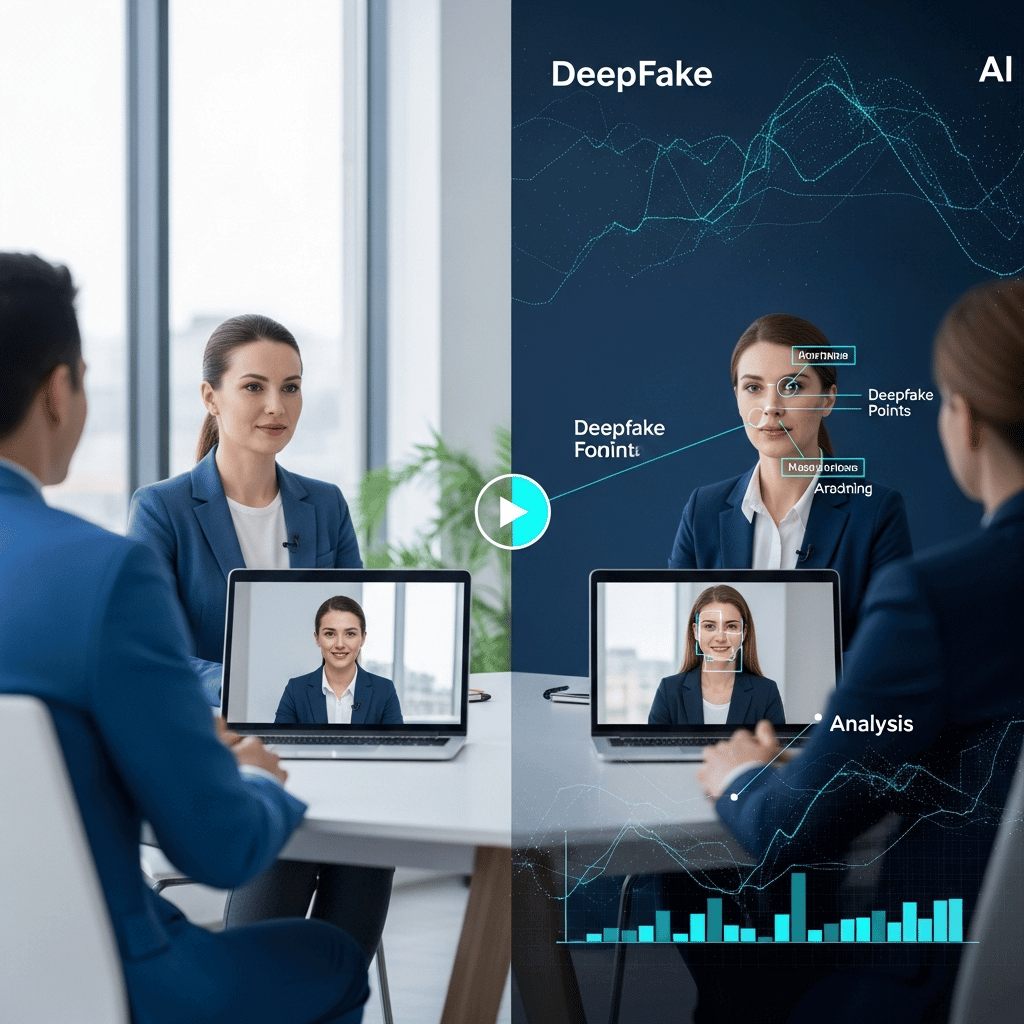
18% of hiring managers have already caught candidates using deepfakes in live video interviews, according to a 2025 Greenhouse survey. That's nearly one in five, and that's only the ones who got caught. The ones who didn't are the problem.
69% of UK hiring leaders now rank AI-powered impersonation and deepfakes as the most sophisticated threat to recruitment integrity. The financial scale backs that up. Job scam losses jumped from $90 million in 2020 to $501 million in 2024. A 457% increase in four years.
You're not interviewing a person. You're interviewing a production.
What makes deepfake fraud so dangerous is how invisible it is to the naked eye. A recruiter on a 30-minute video call has no reliable way to detect real-time AI overlay on a face, voice modulation, or a professional stand-in sitting three interview stages deep. The manipulation happens at a layer human perception simply cannot reach.
State-Sponsored IT Worker Infiltration
According to nine security officials, nearly every Fortune 500 company has unknowingly hired a North Korean IT worker.
This is an active, state-funded operation. CrowdStrike tracked a 220% rise in 2025 in North Koreans gaining fraudulent employment at Western companies. Upwards of 100,000 operatives are currently spread across 40 countries, generating roughly $500 million annually for the regime , money that funds weapons programs and access that funds something far worse.
These are not sloppy applications. Operatives use stolen identities, VPNs, fabricated employment histories, and proxy interviewers to pass every standard screening check — the resume looks real, the LinkedIn looks real, the video call looks real, and the threat remains invisible to anyone not specifically trained to find it.
That reframes what fraud detection actually is. It stops being a hiring optimization tool and starts being security infrastructure, the earliest point in your org where a state-sponsored actor can be stopped before they are inside your systems, on your Slack, with access to your codebase.
Why AI Makes Recruiting Fraud Impossible to Spot Manually
The same tools recruiters use to screen candidates faster are the ones fraudsters use to manufacture better candidates. That's the core tension.
AI writing tools produce polished, ATS-optimized resumes in minutes. AI coaching tools prep candidates with exact answers to common technical questions. Voice and video manipulation tools handle the interview. A fraudster with a $50/month software stack can now run a professional hiring campaign at scale, submitting hundreds of applications across dozens of companies simultaneously, each one calibrated to pass a different job description.
No recruiter can out-review that volume, and volume isn't even the hard part. The hard part is that each individual application looks legitimate: the resume is coherent, the LinkedIn history is consistent, the candidate answers questions fluently, and there's no obvious tell.
Manual review was built for a world where bad applications were sloppy, and that world is gone. When AI generates the fraud, only AI can reliably detect it. The signal-to-noise problem at the application layer is now too complex for human pattern recognition alone.
How Fraud Detection Technology Works in Recruiting
Fraud detection in recruiting is not a background check with a new coat of paint. The mechanics are fundamentally different, and understanding what's actually under the hood explains why generic identity tools keep missing what purpose-built ones catch.
At the application layer, effective detection runs every applicant across dozens of signals simultaneously: IP location, device fingerprinting, email provenance, phone number characteristics, resume file metadata, and social account ownership. Each signal tells part of the story. None of them tells the whole thing. What matters is how they relate to each other. An IP in Vietnam, a LinkedIn created six weeks ago, a resume file authored on a device registered in Seoul, and a GitHub with zero commit history before this month: individually, each one is explainable. Together, they're a fraud ring.
Resume metadata is one of the most underused signals in the space. The file itself carries information most recruiters never see: creation timestamps, authoring software, device identifiers, and editing patterns. Fraud rings often manufacture applications in batches, and those batches leave fingerprints in the metadata that are invisible on the page but obvious to a scanner trained to look for them.
Social account ownership verification goes a layer deeper than most tools attempt. Knowing a LinkedIn URL exists is not the same as knowing the applicant actually owns that account. OSINT-based verification can confirm whether the profile's digital history is consistent with the person claiming it, or whether a stolen identity is being borrowed for the application.
Network intelligence is where the scale advantage compounds. When a fraud signal is confirmed across one company's applicant pool, that pattern gets added to a shared consortium dataset. The next company that encounters the same device, the same email cluster, or the same resume fingerprint benefits from everything already learned. Fraud rings apply to hundreds of jobs, and consortium data catches them precisely because it spans the network.
| Detection Signal | What It Catches | Why Manual Review Fails | How Automated Detection Works |
|---|---|---|---|
| IP Location Analysis | VPN masking, geographic inconsistencies, known fraud ring locations | Recruiters cannot cross-reference IP data against global fraud databases or detect proxy routing patterns | Triangulates IP against claimed location, email domain, phone area code, and LinkedIn history in real time across 4+ billion data points |
| Device Fingerprinting | Shared devices across multiple applications, virtual machines, emulators used by fraud operations | Device metadata is invisible in standard application systems and requires specialized extraction tools | Captures hardware identifiers, browser characteristics, and operating system signatures that reveal batch-manufactured applications |
| Resume Metadata Analysis | Batch-created documents, template reuse across fraud rings, authoring software patterns | File metadata is hidden from recruiters viewing PDFs or Word documents through standard viewers | Extracts creation timestamps, authoring device IDs, software versions, and editing patterns that fingerprint fraud ring document factories |
| Social Account Ownership Verification | Stolen LinkedIn profiles, fabricated employment histories, account takeovers | Checking that a LinkedIn URL exists does not verify the applicant actually owns or controls that account | Uses OSINT verification to confirm profile ownership, activity patterns, network connections, and digital history consistency |
| Network Intelligence | Known fraud rings, repeat offenders across companies, coordinated application campaigns | Individual companies cannot see patterns that span hundreds of employers and thousands of applications | Aggregates fraud signals across consortium dataset to flag devices, emails, and resume fingerprints encountered elsewhere |
| Deepfake Detection | AI-generated faces, voice modulation, proxy interviewers, lip-sync manipulation | Real-time facial and voice manipulation operates at millisecond latency that human perception cannot detect | Analyzes lip syncing accuracy, eye movement patterns, facial construction consistency, and voice characteristics across interview stages |
Tofu Stops Fraudulent Applicants Before They Reach Recruiters
Every signal described in the previous section is what Tofu runs on every applicant, automatically, before a recruiter opens a single resume.
FraudDetect screens across 40+ signals at the moment of application submission. Identity validation runs against 4+ billion data points and a proprietary Fraudbase built from 5M+ analyzed profiles. We triangulate across IP, LinkedIn, email, phone, GitHub, and resume file metadata. Social account ownership gets verified. Location consistency gets checked. Fraud ring fingerprints get matched against the network. By the time a recruiter sees a candidate, the work is done.
DeepDetect picks up where FraudDetect leaves off. During live interviews on Zoom, Teams, or Google Meet, it analyzes lip syncing, eye movement, facial construction, and voice patterns in real time. Proxy swapping across interview stages gets flagged. Deepfakes get caught before offers go out.
The full-funnel coverage is the part no other tool offers. FraudDetect at application. DeepDetect through interviews. Both integrating with 90+ ATS systems without disrupting recruiter workflows.
The person who applies should be the person you hire, and that's what we built this to guarantee.
Final Thoughts on AI-Powered Fraud in Hiring
Recruiters can't out-review AI-generated fraud at scale, and that's not changing. AI recruiting tools built for fraud prevention screen every applicant across dozens of signals before a resume ever reaches your desk: IP analysis, device fingerprinting, social account ownership, and resume metadata that tells the story most hiring teams never see. Deepfakes and proxy interviews look real in a 30-minute video call. The detection has to be automated, network-informed, and running at every stage of your funnel, or you're hiring based on hope instead of verification.
FAQs
How can I tell if a candidate is using AI to fake their interview?
Human review alone can't reliably detect it—deepfake technology manipulates lip syncing, eye movement, facial construction, and voice patterns at a layer your eyes can't catch. Real-time automated detection during video calls is the only way to consistently flag AI-generated overlays and proxy swapping across interview stages.
What's the difference between application fraud and interview fraud?
Application fraud happens when a candidate submits false information, stolen identities, or fabricated credentials to pass initial screening. Interview fraud occurs when someone uses deepfakes, AI voice tools, or a professional stand-in during live video calls. You need different detection systems for each stage—FraudDetect at application, DeepDetect during interviews.
Why can't background checks catch North Korean IT worker fraud?
Background checks verify documents and employment history that already look legitimate—stolen identities, fabricated LinkedIn profiles, and proxy interviewers pass those checks because the credentials are real or convincingly manufactured. Detection has to happen at application using metadata analysis, IP triangulation, social account ownership verification, and network intelligence that reveals patterns invisible to traditional screening.
Can fraud detection flag legitimate candidates by mistake?
Generic fraud tools built for fintech often misfire on VPN usage or VOIP numbers—common among engineers applying to crypto and security companies. Purpose-built recruiting fraud detection understands context: it analyzes 40+ signals together, not individual red flags in isolation. The model learns what fraud rings actually look like, not just what looks "unusual."
How long does it take to integrate fraud detection into an existing ATS?
FraudDetect integrates with 90+ ATS platforms and runs automatically at application submission—no change to recruiter workflows. DeepDetect plugs into Zoom, Teams, and Google Meet without disrupting interviews. Setup typically completes in days, and detection starts immediately without requiring your team to learn new tools or review processes.
What percentage of technical assessment cheating is expected by 2028?
Projections show that by 2028, one in four job candidates will be fraudulent. Technical assessment cheating has already doubled from 16% to 35% in a single year, indicating this is a structural shift rather than a temporary trend.
How much money do North Korean IT worker operations generate annually?
North Korean IT worker schemes generate approximately $500 million annually for the regime, with upwards of 100,000 operatives spread across 40 countries. This money funds weapons programs and provides access to Western company systems and codebases.
What signals does fraud detection software analyze at the application stage?
Effective fraud detection analyzes 40+ signals including IP address, device fingerprinting, email provenance, phone number characteristics, resume file metadata, social account ownership, and patterns across these signals. The key is how these signals relate to each other, not individual red flags in isolation.
Why did job scam losses increase so dramatically between 2020 and 2024?
Job scam losses jumped from $90 million in 2020 to $501 million in 2024—a 457% increase. This surge corresponds with the rise of AI tools that enable sophisticated deepfakes and identity fraud that are nearly impossible to detect through manual review.
What is resume metadata and why does it matter for fraud detection?
Resume metadata includes hidden file information like creation timestamps, authoring software, device identifiers, and editing patterns. Fraud rings often manufacture applications in batches, leaving fingerprints in metadata that are invisible on the page but detectable by automated scanners.
How do fraudsters pass multiple interview stages with different people?
Fraudsters use proxy swapping, where different people appear at different interview stages, along with deepfake technology for real-time facial and voice manipulation. Without automated detection analyzing lip syncing, eye movement, and facial construction, these swaps are nearly impossible to catch in a 30-minute video call.
What makes recruiting fraud a security issue beyond just a hiring problem?
State-sponsored operatives like North Korean IT workers gain access to company systems, Slack channels, and codebases once hired. Fraud detection becomes security infrastructure—the earliest point where a state-sponsored actor can be stopped before they're inside your organization with access to sensitive data.
Do hiring managers know they're losing the fraud detection battle?
Yes—62% of hiring professionals admit that job seekers are now better at faking credentials with AI than recruiters are at detecting it. Additionally, 59% of hiring managers already suspect candidates are using AI tools to misrepresent themselves.
How does network intelligence improve fraud detection across companies?
When a fraud signal is confirmed in one company's applicant pool, that pattern gets added to a shared dataset. The next company encountering the same device, email cluster, or resume fingerprint benefits from everything already learned, since fraud rings apply to hundreds of jobs across multiple organizations.
What's the risk of hiring based on manual review alone in 2026?
Manual review cannot process the volume or detect the sophistication of AI-generated fraud—when fraudsters use the same AI tools recruiters use for screening, each individual application looks legitimate. Without automated detection across dozens of signals, companies are essentially hiring based on hope instead of verification.